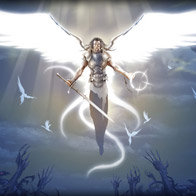
In fact, all mythological systems deriving from the Sumerian-Babylonian source have always shown a pronounced interest in ministering spirits rather than in free spirits.
Other Magic
Пишите мне
Enmerkar's Blog содержит более тысячи авторских статей эзотерической направленности.
Введите интересующий Вас запрос — и Вы найдете нужный для Вас материал
In fact, all mythological systems deriving from the Sumerian-Babylonian source have always shown a pronounced interest in ministering spirits rather than in free spirits.
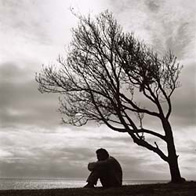
People often conclude that any being is doomed to absolute, transcendental solitude and cannot in principle be understood by any other being. How justified is this conclusion?

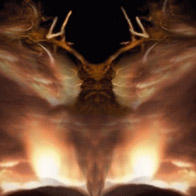
We have repeatedly noted the exceptional role gods play in magically oriented mythology: those who bind the threads of life, who steward plants and animals, and who channel the Great Flow of Power into the backwaters of specifically embodied entities.
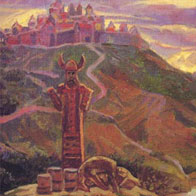
Among the Radiant figures who uphold the foundations of the Cosmos, the figure of the Great Guardian, the Mighty Earth God, occupies a central place in every mythology.
Though he is rarely at the head of any people’s pantheon, this God has nonetheless always enjoyed exceptional veneration as the Lord of life and death.

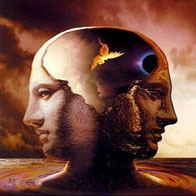
Magic begins with overcoming the fear of facing oneself.
And that fear is not accidental. If one peers into the depths of oneself, one can discern an alien, malicious and treacherous being hiding there.
Where did it come from?
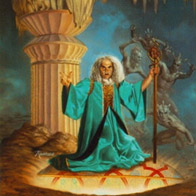
The Four Great Rulers of the cardinal directions, who govern the kiners and, accordingly, the Spirits, enable a Magus who has contained their power and assumed their place to effectively command mighty forces.
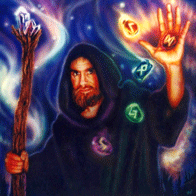
Although Runes as a realizational-magical instrument possess considerable power, they, like all that is embodied, have limits to their capabilities.
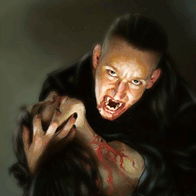
In the discussion of the Interworld we mentioned Elementers — disembodied beings situated between incarnations and belonging to none of the worlds. However, mythologies not only describe such beings in their manifestations in our world but also record numerous cases of their deliberate creation.
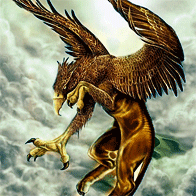
In every mythology, alongside its anthropomorphic characters, also depicts magical, sometimes even divine, animals. Dragons, unicorns, griffins, manticores, basilisks, chimeras and other creatures are integral figures in myth.
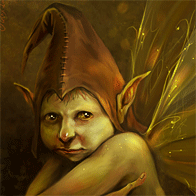
Fairies are a people arising from two distinct sources. One branch of them are the “offspring” or the result of the degeneration of the Light and Dark Alvs.
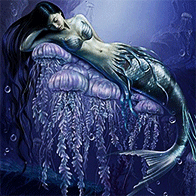
One fact on which most mythological systems agree is the existence of a peculiar “Space between the Worlds.” The crossroads of the Worlds in Norse mythology, the Shi of the Celts, the “subcelestial” worlds of Christianity — all of these describe this rather heterogeneous, yet continuous space.
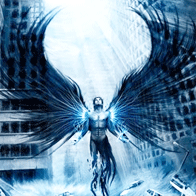
Whether we regard spirits as projections of the mind or as objectively existing beings, we must acknowledge that for millennia people have found ways to interact with them.
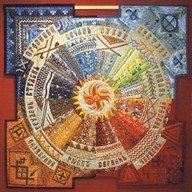
The World Wheel, with its eight “spokes”, rolling through the three worlds, leaves 24 imprints, 24 steps that the World (and any phenomenon within it) takes on the way to its becoming