
Books of Neo-Paganism: Profanation or Revival?
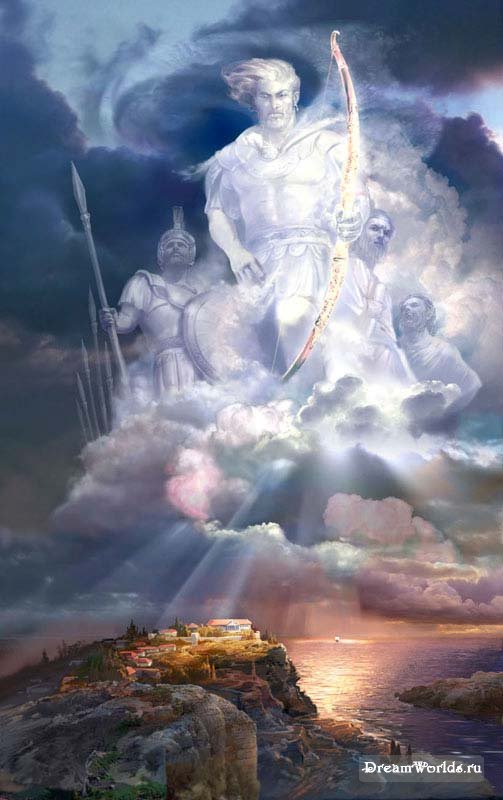
The literature of European paganism is scant and, broadly speaking, is largely limited to the Eddas and the Mabinogion. At the same time, there is a whole stratum of sources that historians and linguists view with considerable skepticism, yet which are regarded as valuable and authentic in neo-pagan circles. The best-known examples of such literature are, of course, the Veles Book and the Book of Ferillt.
We will not enumerate here all the arguments for and against the authenticity of these sources; rather, we will address another matter — their influence on consciousness. For if any object exerts a powerful influence on the mind, it plainly deserves attention as a source (or an obstacle to power).
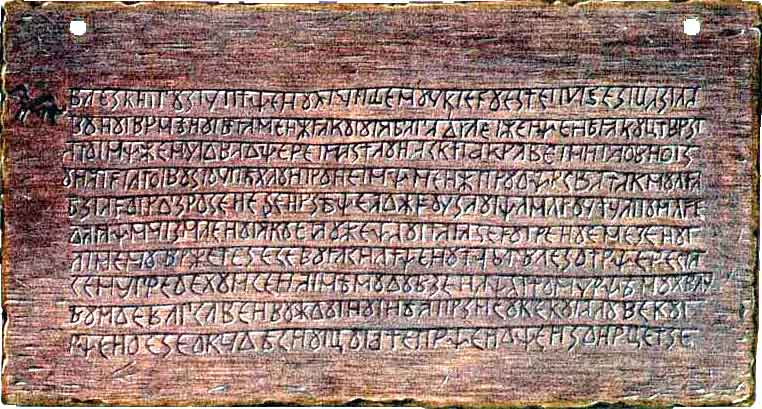
The main consequences of accepting “Veles Book” as genuine are: 1) recognizing ancient Slavic religion as monotheistic; and 2) rejecting a Norman origin for this religion while asserting close ties with Hindu beliefs. Both consequences are strategically significant.
Indeed, the words
“And if there be any worthless person who counts those Gods, separating them from Svarog, he shall be cast out of the kin, because we have no Gods except Vyshnya… Let no one divide that Multitude and say that we have many Gods.”
unequivocally assert the secondary status of the gods in relation to “Vyshnya“, who in many passages appears as an active agent. Admittedly, elsewhere Vyshen is called one of the gods: “Behold, Vyshen comes upon the clouds to us and says: ‘Children, build this city of yours and strengthen it; soon in the spring you will be surrounded by other enemies, and your struggle will be harsh and swift. And Svarog will send Me to you.'”. However, the whole spirit of the “Veles Book” is framed by the motif “God is One and Many”.
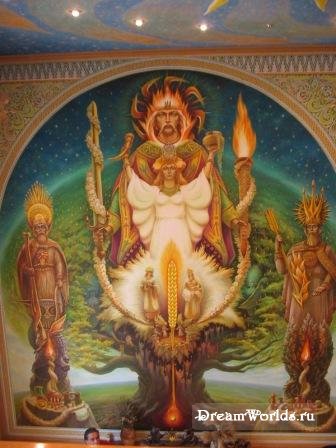
Such an attitude — viewing gods as aspects of the One — on the one hand establishes a vast gulf between gods and embodied humans, and on the other posits unity between man’s spirit and the Absolute (similar to the Indian notion ‘Atman is Brahman’).
All these ideas are closely linked to a second significant consequence: the Vedic character attributed to the Veles Book’s religion and philosophy. The “Aryan idea“, which traces the roots of Slavic proto-civilization to a great primal culture, of course boosts national consciousness. According to such traditions, the Aryans originate from the Hyperboreans who lived in the Arctic or even on a continent at the North Pole. The spiritual grandeur of the people described in the Veles Book is evident:
“The grandchildren of Dazhdbog are the beloved of the gods, and holding the godly plough in the right hand, we sing the glory of Surya, and ponder on it until evening. And five times a day we praise the gods, and we drink suritsa as a sign of benevolence and communion with the gods, who in Svarga also drink to our happiness.”
Thus, as a source the Veles Book shapes neo-pagan ideology of those strands of neo-paganism that accept its authority; its importance will not be diminished by claims of forgery.
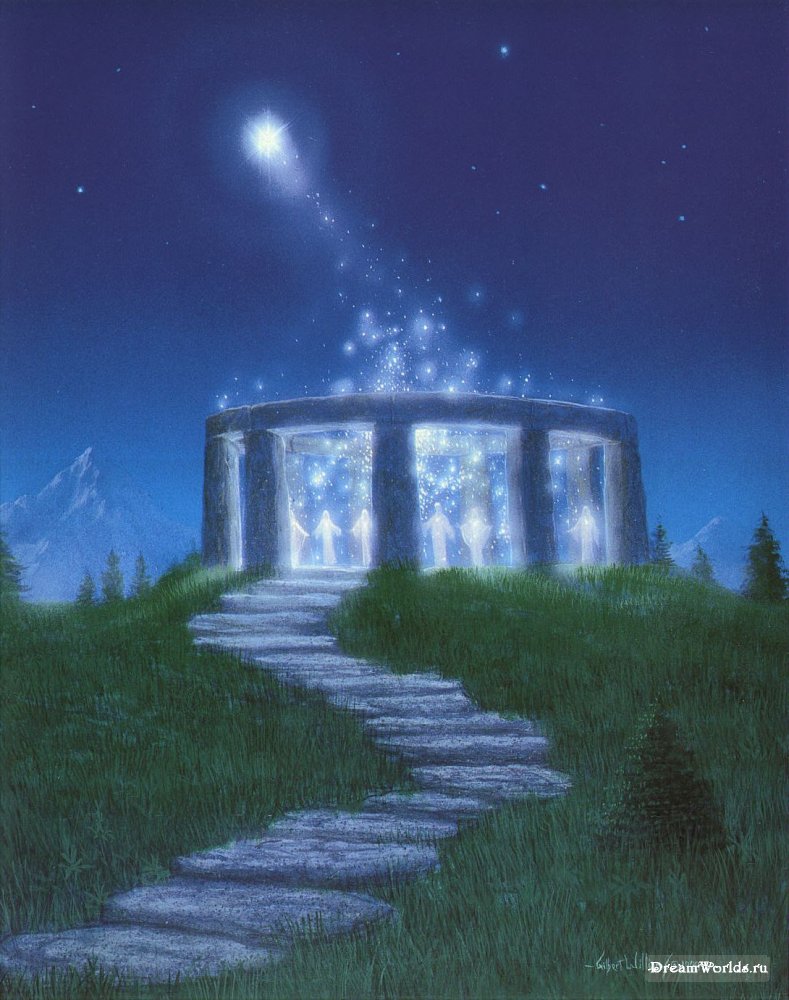
The same applies to the “Book of Ferillt“. The magical ‘Book of Ferillt’ is mentioned in the Welsh ‘History of Taliesin’, yet the authenticity of the quotations from it cited by contemporary neo-druids is widely disputed. Again, without examining the source’s authenticity, let us consider its ideological consequences. There are many; in my view the most important are: 1) the notion of separating magical practices by gender:
“Male and female mysteries should be conducted in different places, so that the purity of energy may be maintained, whereby immersion in the sexual will ensure accelerated growth.”
and 2) the idea of the world’s polarity:
“For the Celts, all reality was a direct reflection either of the KINGDOM OF THE SUN (that is, the masculine, radiating, active sphere) or of the MOON KINGDOM (that is, the feminine, absorbing, passive sphere).“
Both of these closely related consequences find enthusiastic acceptance among some neo-druids and equally vigorous resistance among others. Interestingly, these debates are conducted primarily in the Americas — a region hardly the most authentic for druidism. It is there, in the ‘land of equal opportunity’ where many “initiated druids” of both sexes abound, the ideology attributed to ancient Celts is most zealously preserved. Be that as it may, these ideas put druidic conceptions on a par with Wicca, another near-pagan current lacking genuine traditional roots.
Those more attracted to the “closeness to nature” and a freedom of morals choose the Wicca movement (it should be noted they would rarely admit that their teachings lack druidic roots). Those more drawn to a gnostic attitude toward the world — one that involves restrictions and requires serious work — will adhere to the views expressed in D. Monroe’s book. In each case the choice follows personal preferences formed within the corresponding myth.
Thus, regardless of when or by whom the books accepted as authoritative among neo-pagans were written, they have two indisputable effects: first, they help form the myth accepted by these groups as a description of the cosmos, thus creating their ideological foundation.
Secondly — and, it seems to me, more importantly — the very debates over authenticity draw wide attention to paganism’s revival or reconstruction. That, in turn, expands the range of myths available to the human mind, broadens people’s minds, increases the number of ways to acquire power, and will undoubtedly spur someone at the beginning of their own Way of Power.
Leave a Reply