Runic Ways: Galdr and Seið
In our conversations about the Runes we have repeatedly noted that Runes are a symbolic expression of flows of Power.
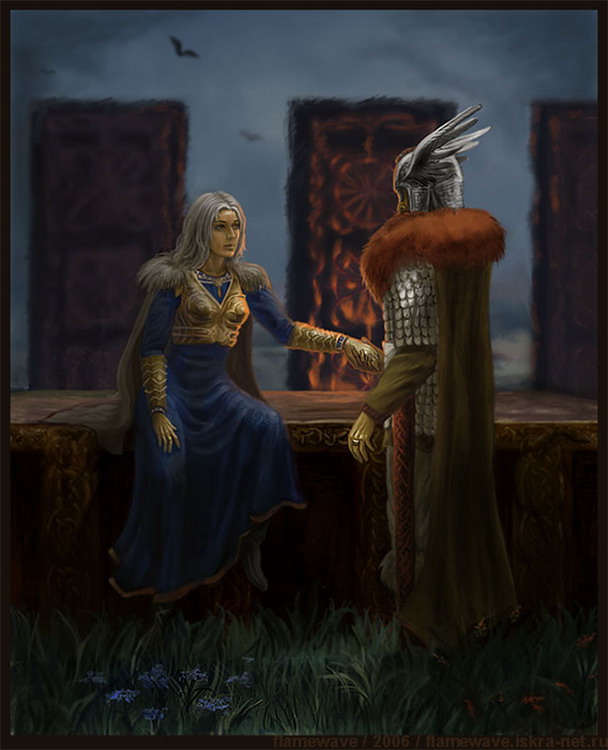
I would now like to draw attention to the fact that any flow can be seen in two ways: on the one hand as a vector with specific coordinates and magnitude, and on the other as the content of that flow, its inner flow.
These two points of view also reflect two modes of expressing Runic force: the “masculine” (analytical, treating Runes as distinct elements) and the “feminine” (immersive, involving immersion in the flows of power).
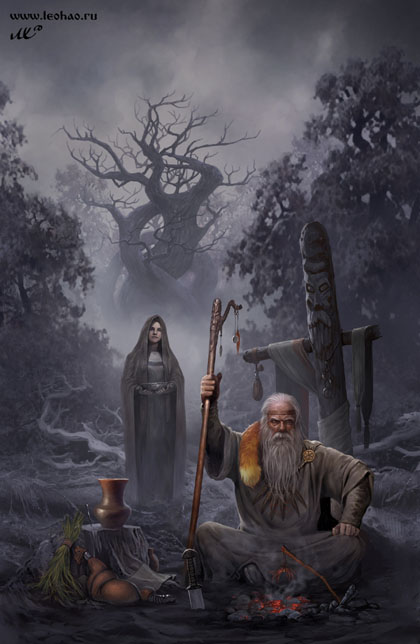
Of course, the labels “masculine” and “feminine” are merely conventional, yet they aptly reflect the gendered distribution of approaches.
Accordingly, the flows of Power symbolized by the Runes can be employed in two ways: by enclosing them within a definite shell (this approach in the Northern tradition is called “Galdr“) and by immersing oneself in them, moving with them (Seið).
It is clear that Galdr has traditionally been regarded as a predominantly masculine form of Magic, while Seið is feminine.
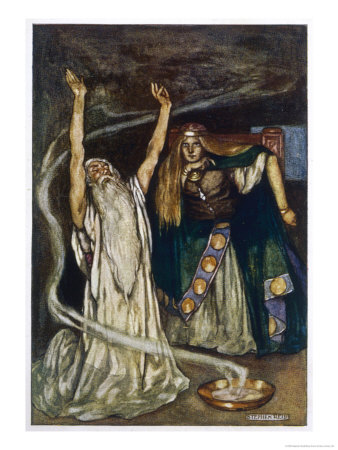
However, I wish to emphasize once more that in fact both Ways deal with the same Powers; only the mode of interaction differs.
Galdr is the art of creating Runic spells, woven Runes, and Runic talismans. Seið is the art of sung spells, divination, and crossing the threshold between worlds.
Strictly speaking, each of these Arts is itself threefold. Three sources spring from beneath the roots of Yggdrasil: the Source Urd (wisdom, fate), the Source of Mimir (the “mead-bearing” well nourishing the Tree), and Hvergelmir (the “Boiling Cauldron” that sprang at the origins of Creation), reflecting the same division of Wisdom into Three rays: Crystal, Silver, and Golden — Neutral, Passive and Active.
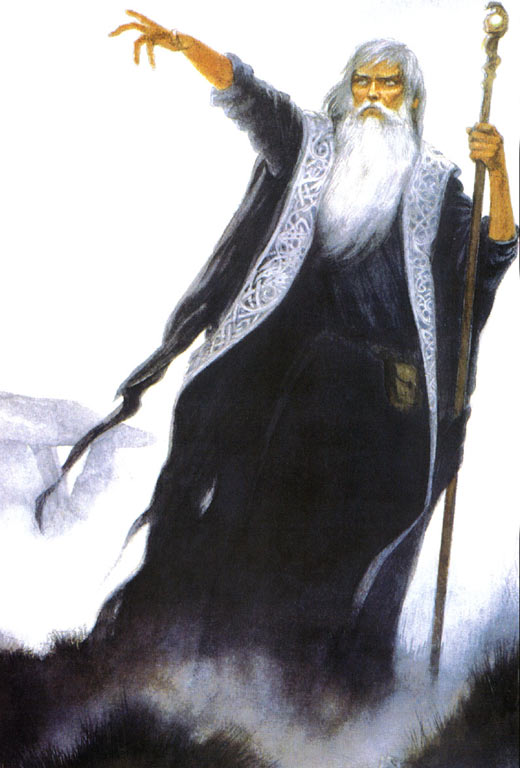
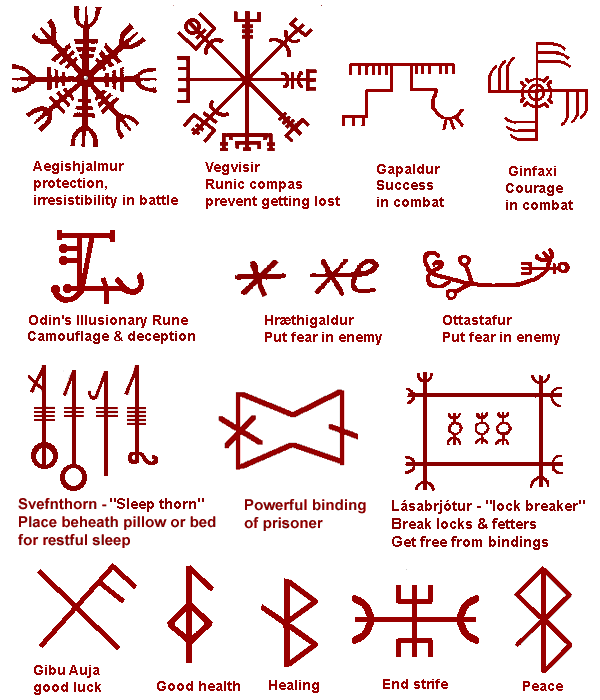
Galdr includes 1) Poetic incantations (Vísur) — the active part (Hvergelmir), 2) Runic talismans and amulets — the passive part (Mimir), and 3) the speaking a spell combined with the carving runes — the Neutral part (Urd). An example of the third case is the famous bone plaque from Devonshire bearing the inscription “May God keep Hadda’s honour, for he has written thus.” The recording of a word (a sentence) in Runes is already a magical act. It is thus that the Druids forbade writing down their books, poems and lays (in the Ogham alphabet, likewise considered magical): writing was regarded as a magical action that should not be repeated often.
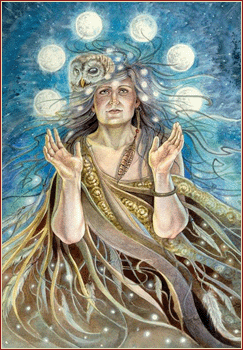
Seið, similarly, includes 1) ritual singing, 2) Journeys between Worlds (shamanic wanderings), and 3) Foresight, divination.
As mentioned, only one person mastered both kinds of magic; he learned Galdr from the jötnar (we spoke of Mimir and Bölþorn) and Seið from Freyja. For ordinary people, such fusion seems extremely difficult and rarely achievable.
It seems important both to understand the difference between the two Ways and to be aware of their inner unity.
On the one hand, this means that a man will never become the kind of master of Seið that a woman can more easily attain, and a woman rarely achieves the same precision in using runes and vísur that a man attains more readily. But on the other hand — a man will never comprehend the sources of a power without a glimpse into its depths (Odin’s eye in the Source Urd), and a woman will not return from a journey without fixation at the starting point (the attempt to abduct Freyja by the thurses).
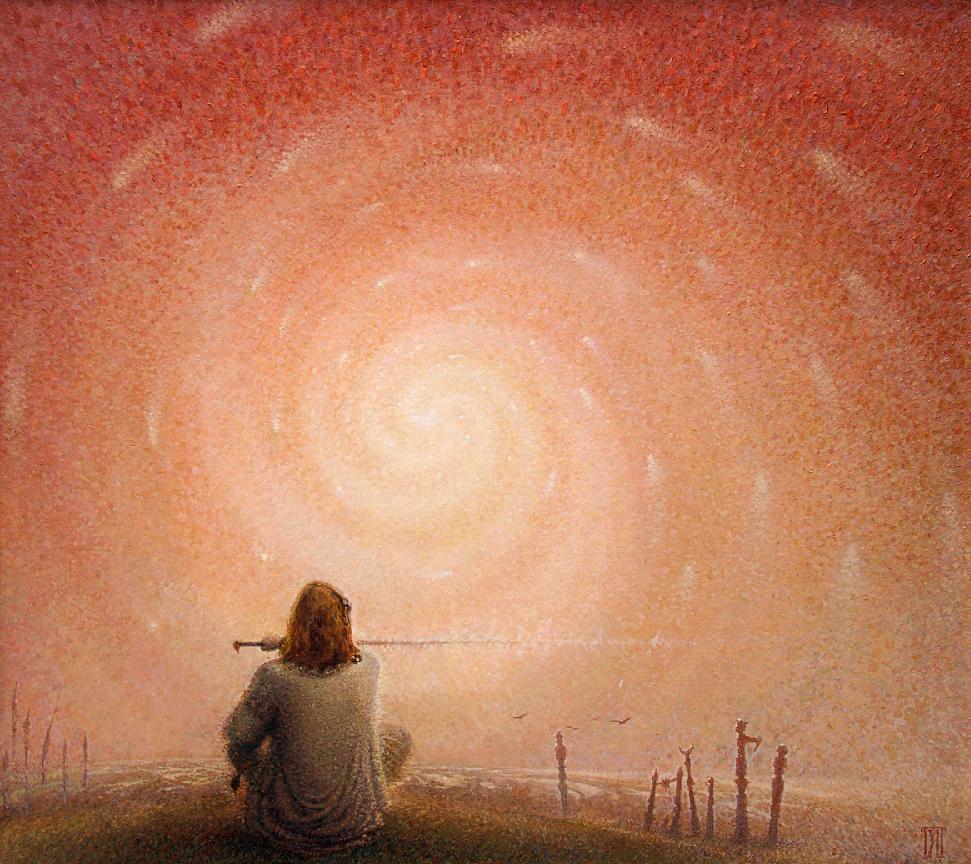
Only the unity of the two Ways, rarely attainable in practice but necessary as an ideal, can bring one closer to the fullness of wisdom and power.
The last picture is titled “I Know of God.” This is from the ancient Russian alphabet – it looks like Az Buka Veda? It is interesting if this is truly the case, how does the “spell”-primer sound in full? (I would never have thought that the Russian alphabet is a spell:)
The order of letters in alphabets, or futarks undoubtedly has important meaning … The Arcana of Tarot, or Runes, confirm this. If we consider them as a “spell”, one could say that its action is the foundation and support of the myth since it is precisely in these symbols, their order, and relationships that Knowledge was formally expressed/transmitted.
I am really interested in hearing the complete version of the primer in a clear (modern) variant – probably besides “A Be Ve Ge De …” there is also a full version in the form of a connected story “I Know of God …” which contains meaning. Although perhaps this is still an interpretation, because I heard about “I A Book Vedi – Speak Good”, and I see the variant “I Know of God” for the first time. Not every day do you learn that what is now “ordinary, familiar” originally had another meaning (not as flat as a simple listing of the letters of the language). Although perhaps this is not related to the topic of “Runic paths” 🙂
How can a man look into the depths of power when sowing by his nature is not a man’s job? (Similarly: galdr is not a woman’s thing)?
There are no restrictions, only advice and prescriptions. Every matter contains the seed of its antagonism.
According to the tradition of seita, a woman can teach a man about seita, but only one chosen by her. It should be remembered that seita is a combination of witchcraft and shamanic practices from deep antiquity; I would say pre-shamanism, and traditionally, in the female mysteries of the North, shamans were women. Seita is also the mystery of female sexuality, and learning it from a woman requires going through ritual intercourse. Seita is also an innate ability that comes from past incarnations, and here it’s appropriate to quote the Wiccan motto ‘Once a witch, always a witch.’
In other cultures of female shamanism, there were rituals of dressing men in ‘women’s clothing’ to gain temporary access to this ability. In modern paganism in the West and Northern Europe, seita has become quite popular among homosexuals, and this is confirmed in the works of Freya Aswin.
I know of God, and knowing God, I speak Good, Good is a multifaceted Life, etc. In the Ancient Slavic Alphabet, there were 49 letters, and each had its own Image. The same as Runes, but somewhat simpler.
In practice – you just take and do what is close to you, according to your nature. And sometimes this can be described as Galdr, sometimes as Sejt, and sometimes it can’t be described at all :), nonetheless, the indescribable and mad act later brings results.