
Why Must One Hunt for Power?
Since echoes of Native American magic reached us, the notion of the “Hunt for Power” has entered common usage, spread, and, as often happens, been debased. But is it alien to European magical traditions?
The answer is clear — of course not; on the contrary, it is quite naturally present.
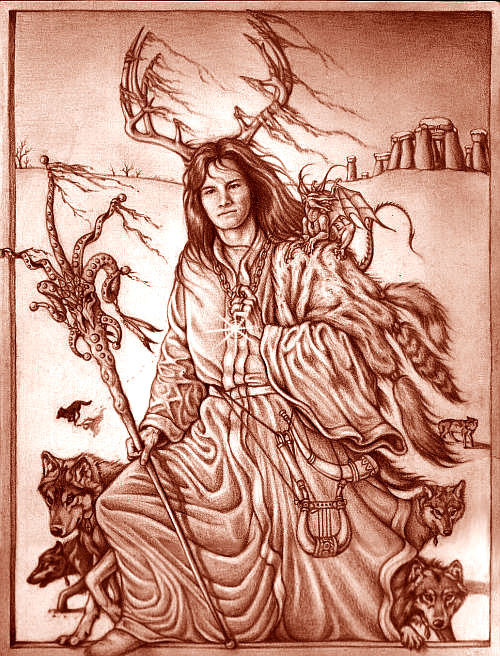
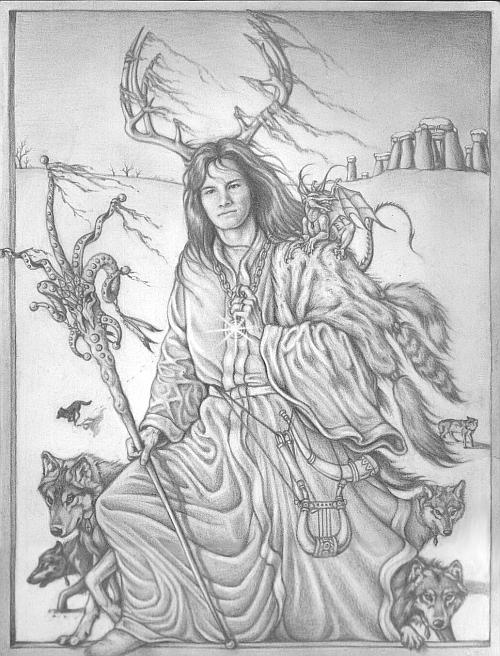
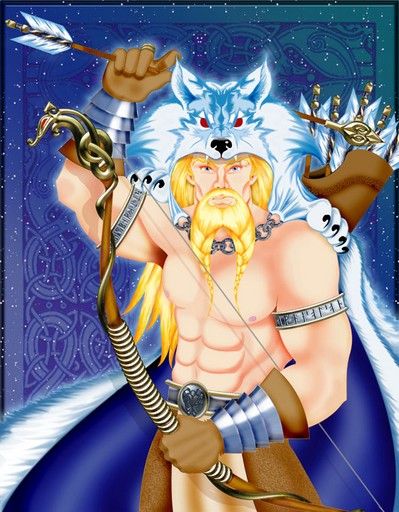
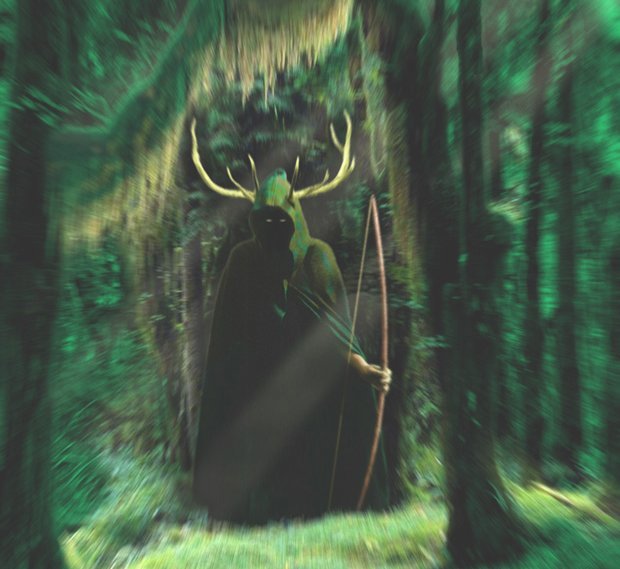
Two mythological figures stand at the center of this notion: Ullr among the Scandinavians and Herne among the Celts.
Ullr was discussed in the article on the Rune Eihwaz, and even Shakespeare mentioned Herne:
“There is an old legend of Herne, Who long ago was the keeper of this park: They say that in winter nights, Decked with antlers, he walks among the oaks, Withering the trees and blighting the cattle, Making the milk run blood and rattling his chains, Filling all with tumult and fear.”
(“The Merry Wives of Windsor”)
It should be added that Ullr is one of the more complex figures in the Scandinavian pantheon. This Aesir can be associated with both Heimdall and Loki (there is a version that Ullr is Sif’s son by Loki), and in effect serves to reconcile and balance them.
In this respect Ullr is very close to the Slavic Veles, who is likewise simultaneously a god of beginnings and a god of ends, a god of life and a god of death.
Herne, meanwhile, appears to be an aspect of the great Celtic earth-god, known to the Irish as the Dagda or to the continental Gauls as Cernunnos.
This image is also close to the Slavic conception of Veles — the god of the earth’s elemental forces.
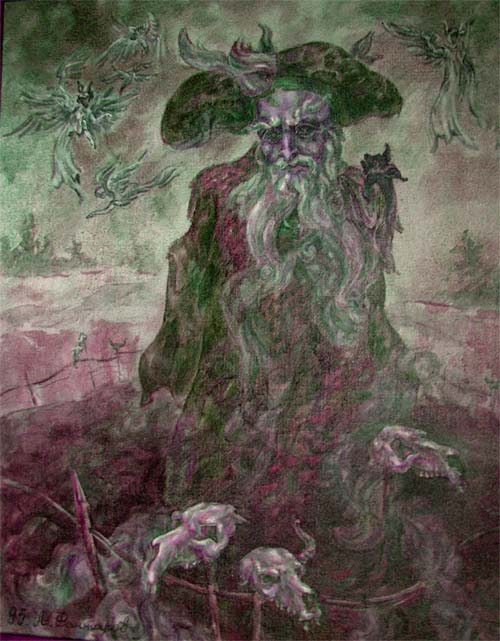
Comparing Veles with the figures of Western European hunters leads to an important conclusion: Veles, among other things, is a god of magic (and of wisdom and music), and therefore Magic has something in common with the Hunt.
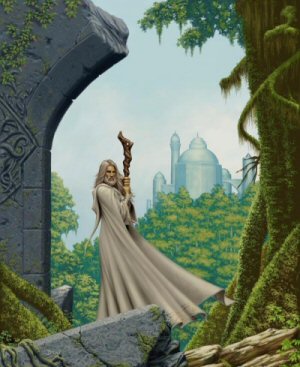
These key figures, although usually associated with the so-called “Wild Hunt” — conducted, according to legend, once a year (at Yule among the Scandinavians or Samhain among the Celts) by sombre gods (among the Wild Hunters are even Odin himself, and among the Celts a range of otherworld gods such as Fúamnach, Arawn, and others) with the aim of bringing back those who fled the otherworld — they nonetheless embody the very spirit of the Hunt.
Hunting — the most important occupation of ancient peoples — naturally became one of the key archetypes of the human world.
The notion includes the skills of orientation, tracking, reading signs and traces.
All these skills are also necessary in the abstract hunt, the Hunt for Power.
It is not that Power hides itself, yet it is not handed out to just anyone.
In fact, acquisition and accumulation of Power (in the sense of Potency) is a step into the unknown, because from the standpoint of lesser Power one cannot see where greater Power lies.
And since it is a step into the unknown — it is a Hunt. The hunter never knows precisely where the quarry is. He can only, based on prior experience, make educated guesses.
When a Magus performs a ritual or some other unusual action (a “peculiarity”, since Magic must be unusual, transcending the everyday), he resembles a hunter setting his traps.
And the similarity does not end there.
We have not pointedly juxtaposed the acquisition of power with Veles without reason (whose very name can be read ‘as possessor of power’ or ‘very strong’), because this god of earthly magic (unlike Odin, Svarog — gods of Heavenly Magic, the Magic of Fire and of Inspiration) presides over the flow of power itself, the flow of life.
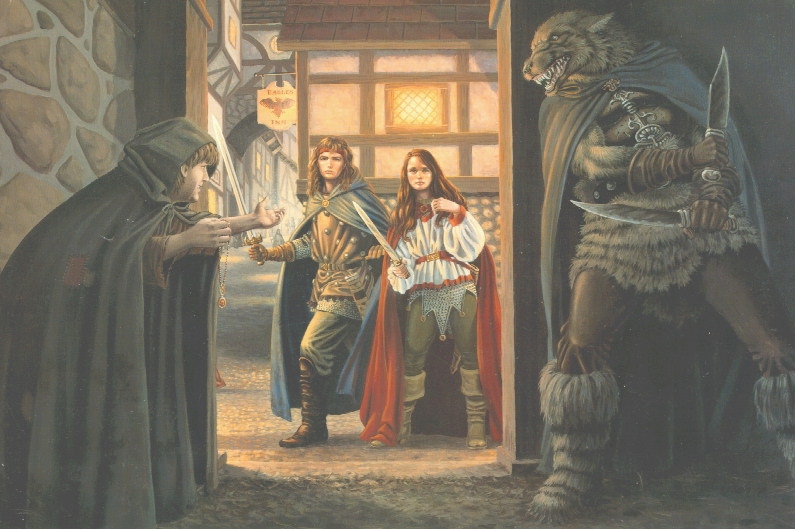
Therefore the Magus, in his Hunt for Power, enters this flow, risking being engulfed by it, dissolving in it; he draws Power there, yet preserves his distinct identity.
What does this mean from a practical point of view? It means that, when undertaking any action, the Magus must understand that he cannot precisely predict the moment when Power will appear; he must be in a state of constant readiness, composure, sobriety, and critical judgment.
Among other things, this implies a significant restriction on the use of the so-called in magic “altered states of mind,” precisely because these states are often accompanied by a loss of control and of critical relationship to reality, and therefore can increase the danger of turning oneself from hunter into a victim.
Sobriety and critical judgment are, unfortunately, not particularly common among magi, who are often possessed by megalomania alternating with hysteria. And it is thus one of the main causes why many magi did not live long is that they often died violently.
By combining adventurousness, the hunter’s ardour, with wisdom and calculation, the Magus not only increases his chances of accumulating power, but also raises the likelihood of prolonging his path and bringing it to a logical conclusion.
Enmerkar, can you describe your first hunt for power? If you want, I will owe you one.
I can. It was in Crimea, 19 years ago. At night, I was suddenly pulled out of my tent, ordered to undress and walk through the mountain forest. I resisted and swore, got myself a part of clothing back, but I went. It was this outing that made my entry into the world of Magic final; then I understood and saw a number of things that have not lost their value for me to this day.
A naked person has an advantage over a clothed one, especially in the twilight or night woods. But long-standing habits do not allow us to understand this just in words. Understanding comes through action. Magical Action. _ Try to become like the beast, Those who wander in the darkness See the world through its eyes Feel the touch of the unknown With the entire surface of your skin Perceive with hyper-sensitive hearing The slightest movements of the living In the surrounding silence From many steps away But, diving deeper and deeper Into the abyss of the unknown, Remember about returning To the world of human customs..
Can you provide a link to the description of the ritual for hunting for power and/or threshold fire? The search engine did not yield anything useful.
You can at least read about it from D. Monroe in ’21 Lessons of Merlin’. For example, http://www.koob.ru/monro_duglas/
This is simply a Code of Conduct for a practitioner-entrepreneur in the modern business world. Accordingly, the equivalent of the Force is monetary signs. Simply put, I read what I feel during work!
Thank you for such a useful article